
Lesson one
Preparation
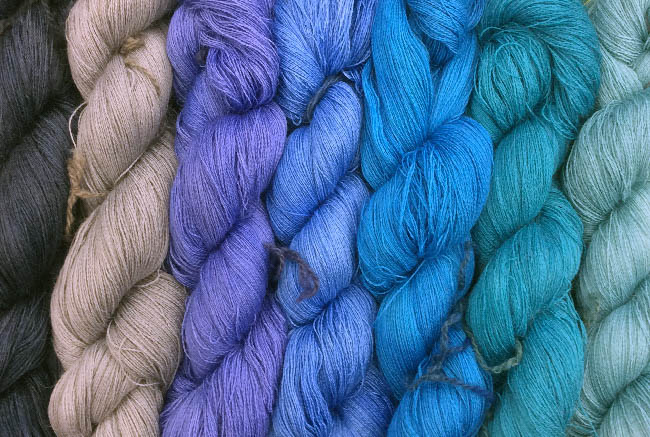
In this lesson we are going to establish the principles for a double huck warp. Then we'll set about getting one made and onto the loom.
For the purposes of sampling, I recommend a warp that is 8 - 10 inches (20 - 25 cm) wide and 4 yards (3.5 m) long. However, if you want to make something wider or longer, with a view to completing a project later, that is absolutely fine.
Jump quickly to...
1.1 Threading for double huck1.2 Choosing yarn and sett
1.3 Choosing colours
1.4 Making your warp and dressing the loom
Update log for lesson one
| Date | Pages affected | Change |
|---|---|---|
| 13 Nov 2022 | EDH01 Threading worksheet (blank PDF) | Profile section now interactive |
| 1 Nov 2022 | EDH01-1 Threading for double huck transcript Page 9 | Colour bar sequence corrected |
| 10 Apr 2023 | EDH01-4 Transcripts | Transcripts added for warping demo videos |
| 6 Oct 2025 | EDH01-4 Winding two colours together | New reference worksheet added |
| 7 Aug 2026 | EDH01-4 Winding two colours together | Text updated for clarity |
1.1 Threading for double huck
We're considering the threading early on because it will inform the planning of our warp.1.2 Choosing yarn and sett
For double huck the pattern of sleying is as important as the overall density of the warp.Need some help planning your layout in the reed? This reference worksheet contains sett tables for a selection of imperial and metric reed sizes.
1.3 Choosing colours
Now that you have chosen your fibre, let's narrow it down.1.4 Making your warp and dressing the loom
Finally, it is time to get on with some practical yarn-wrangling. Feel free to make the warp and dress the loom any way that suits you.In the videos below I demonstrate my preferred method of making a two-colour warp, so that the two colours are separated in the threading cross, but there is no need to do this if you prefer to make your warp another way. For those who would rather wind the two yarns through the cross together, I haven't made a video, but I do have a couple of simple but important tips: you'll find them in this reference worksheet.
In the second video I demonstrate how I make a warp with a single cross, i.e. just the threading cross. Again, the method is applicable to whatever warp-making tools you like to use.